
How the Anti-Gender Movement Has Become a Global Project to Control the
Meaning of Freedom
On October 1, 2025, the Slovak Parliament voted to amend the Constitution, declaring that there are only two sexes — immutable from birth and valid forever. The decision, condemned by human rights organizations as a direct assault on transgender people, was yet another manifestation of the global anxiety surrounding gender — an unease that today links parliaments, groups, and online networks from Bratislava to Brazil.
Within hours, far-right commentators, conservative media outlets, and anti-gender platforms across continents began circulating Slovakia’s decision as an example to follow. On X and Telegram, posts praising the country for “defending biological truth” spread through the same digital networks that routinely transmit anti-trans sentiment and campaigns across the globe.
All were part of what is now known as the anti-gender movement — a transnational campaign that claims to protect families and children, but in essence seeks to regain control over the meaning of the human body.
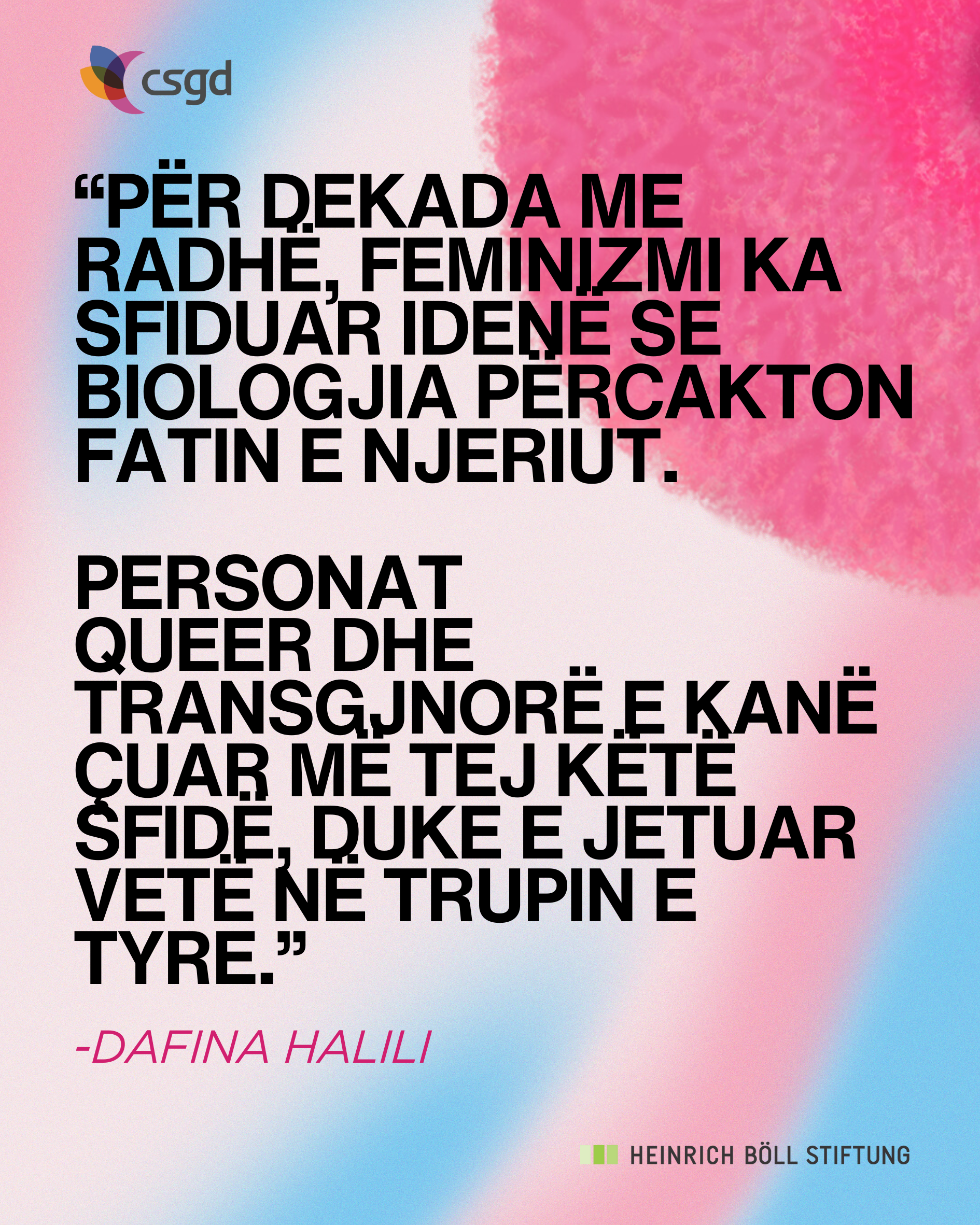
For decades, feminism has challenged the idea that biology determines destiny. Queer and transgender people have taken that challenge further, living it through their own bodies. The backlash now gathering strength is not merely conservative — it is an attempt to reassert the categories of “man” and “woman” as fixed truths, to freeze what history has made fluid.
As Judith Butler wrote three decades ago, gender is not an innate fact but a “repeated stylization of the body” — a performance sustained only through repetition and belief. Those leading today’s anti-gender movement understand this, even if they refuse to admit it. Their anger stems from an awareness that gender has never been as stable as they were taught to believe — and that, precisely because it is performative, it can also be performed otherwise.
Across the world, this awareness has triggered a coordinated and frightening backlash. Religious institutions, nationalist parties, and far-right organizations share legal models, slogans, and propaganda strategies. In the United States, more than twenty states have restricted access to gender-affirming healthcare for transgender youth. In the United Kingdom, long-promised reforms aimed at easing legal gender recognition have stalled. In Latin America and Africa, governments employ the same rhetoric of “protecting children” and “defending tradition.”
In this global campaign, transgender people — and especially transgender women — have become both symbols and targets. They are portrayed as evidence that liberal freedom has gone too far, that modernity has lost its compass.
Over the past two decades, transgender people have achieved what once seemed impossible. Legal recognition has spread across continents; gender-marker reforms have been adopted in countries as diverse as Argentina, Portugal, and Pakistan. In India, the Supreme Court has recognized a “third gender” category, while in Chile, new laws allow individuals to change their legal gender without medical intervention. Trans visibility has entered popular culture — from television to politics — reshaping public consciousness and forcing long-silent institutions to confront a broader understanding of humanity. For many young people, the idea that identity can be self-defined is no longer radical, but self-evident.
Yet this success has brought its own danger. Visibility has led to recognition, but also to punishment. The backlash we witness today is, in a sense, a reaction to what has already been gained. As trans rights advanced, so too did the machinery of opposition — research centers that reframe hatred as concern, politicians who translate moral panic into law, and media outlets that turn equality into a threat.
It is transgender women, in particular, who most terrify this movement. They reveal that gender is not a law of nature but a social agreement; that femininity is not confined to the body nor owned by anyone. If a man can become a woman, then “woman” ceases to be the property on which patriarchal power rests. The ensuing fear is less about identity than about authority — about who holds the right to define the meaning of the body.
Trans girls and women, more than anyone else, embody what Butler calls precarity — a deliberate state of vulnerability produced through social exclusion.
In Kosovo, this precarity takes a tangible form. It would be easy to see Kosovo as a country caught between tradition and modernity. Yet in truth, it mirrors the world. During the debate over the Civil Code, which would have opened the way for same-sex civil unions, members of parliament used the same language heard in Poland, Hungary, and the United States: “foreign ideology,” “danger to children,” “protection of the nation.” These words were not born in Pristina. The anti-gender movement does not need to occupy institutions to win; it only needs to take root in language, until hesitation hardens into belief.
What links Slovakia’s legal zeal with Kosovo’s bureaucratic apathy is the same fear of female identity. Patriarchal societies tolerate women only so long as they remain subordinate — confined by biology, reproduction, and obedience. A transgender woman, by choosing to be a woman, exposes that illusion. She demonstrates that femininity is not an innate substance but a process in motion. Her very existence shakes the order.
In Kosovo, gender identity is legally recognized — even in the Criminal Code — yet daily life tells another story. Suicide attempts remain high; families cast out their children in the name of “honor.”
No administrative procedure exists for changing one’s name or gender marker in official documents, except for a single court decision in 2020 that ruled in favor of one person — a case that has yet to become precedent for others. Queer activists report that requests to change names or gender markers typically end in administrative rejection.
The gap in the healthcare system is even deeper. There are no endocrinologists trained in hormone therapy, no public clinics supporting any form of gender transition, and no protocols aligned with WHO standards. Nor does a single state-run shelter exist for queer youth fleeing home due to violence.
In theory, a shelter should be a place of safety for every member of the queer community. In practice, activists report that the harshest violence falls on trans girls and women. Families and society, they say, find it hardest to accept that a son, relative, or friend could embrace the identity of a woman. This rejection often ends in expulsion from home, physical violence, or the silent cruelty of exclusion from inheritance.
In the end, rights on paper remain abstract; a livable life requires infrastructure — clinics, shelters, care, and trust. Thus, Kosovo does not legally exclude transgender people; it simply acts as though they do not exist.
What begins as neglect turns into policy, reshaping the very structures that once promised equality. Across the world, hard-won rights are being undone — in the United States, in Hungary and Poland, and now in Slovakia. These reversals remind us that rights are not permanent victories but fragile agreements, dependent on political climate and moral panic. The goal of the anti-gender movement is not merely to restrict gender transition; it is to redefine the very meaning of freedom — to place the body under the guardianship of the state, the church, and the family.
Against this international anti-gender movement, solidarity becomes survival. To stand with transgender people is to defend the final frontier of freedom, for their lives mark the outer edge of what societies still recognize as human. The measure of our commitment to equality is not how we treat those who resemble us, but how we accept those who expand the meaning of “us.”
As Judith Butler and many feminist thinkers have argued, the way societies treat trans lives is a test of democracy itself — of its ability to uphold its most fundamental promise: freedom.